What Is a SIEM? A Beginner’s Guide (With Real Examples)
What is a SIEM, in plain English? How security teams collect, correlate, and alert on logs — with real examples and the platforms you should know.
EpicDetect Team
10 min read

What Is a SIEM? A Beginner's Guide (With Real Examples)
If you've spent five minutes looking into a SOC career, you've hit the acronym SIEM. And probably nodded along without being 100% sure what it actually is.
No shame in that. Let's fix it — plain English, real examples, no jargon soup.
SIEM in One Sentence
A SIEM is a tool that collects logs from everything in an organization and helps analysts search them, correlate them, and get alerted when something looks like an attack.
SIEM stands for Security Information and Event Management. But the name matters way less than what it does.
Think of it as the SOC's central nervous system — every system reports in, and the SIEM is where analysts make sense of it all.
Why Do Organizations Need One?
Picture a company with 500 laptops, 50 servers, firewalls, cloud accounts, email systems, and a dozen apps.
Every one of those generates logs. Constantly. Millions of events a day.
An attacker touching that network leaves traces — but those traces are scattered across a dozen different systems. Nobody can watch all of them manually.
The SIEM solves three problems at once:
- Collection — it pulls all those logs into one place
- Correlation — it connects related events across different systems
- Alerting — it flags the patterns that look like attacks
Without a SIEM, you're trying to spot a break-in by checking 50 different security cameras one at a time. With one, all the feeds are on a single wall.
What a SIEM Actually Does, Step by Step
Let's make it concrete.
1. It Ingests Logs
Data flows in from everywhere — Windows event logs, firewall logs, cloud audit trails, application logs. The SIEM normalizes them into a searchable format.
2. It Lets You Search
This is where analysts spend real time. You write queries to hunt through the data — like pulling every failed login for a specific account in the last hour. Each SIEM has its own query language (SPL for Splunk, KQL for Microsoft Sentinel).
3. It Correlates Events
Here's the magic. On its own, a failed login is nothing. But the SIEM can spot: 50 failed logins, then one success, then that account accessing a sensitive server — across three different systems — and connect them into a single story.
4. It Generates Alerts
When events match a detection rule ("more than 20 failed logins from one IP"), the SIEM fires an alert into the queue. That alert is what lands on a Tier 1 analyst's screen.
A Real Example
A phishing email slips through. A user clicks and enters their password on a fake page.
Here's how the SIEM sees it unfold:
- Email logs: the message was delivered
- Web proxy logs: the user visited a suspicious domain
- Authentication logs: a login from an unusual location minutes later
- Endpoint logs: a strange process starts on that user's machine
Individually, each is a shrug. Correlated by the SIEM into one timeline, it's clearly an account compromise in progress. That's the point of a SIEM — turning scattered noise into a story you can act on.
The Popular SIEM Platforms
You'll hear these names constantly:
- Splunk — the long-time heavyweight, hugely powerful, uses SPL
- Microsoft Sentinel — cloud-native, growing fast, uses KQL
- Elastic (ELK) — open-source-rooted, popular and flexible
- IBM QRadar, LogRhythm, Exabeam — common in enterprises
You don't need to master all of them. Learn the concepts and one query language deeply, and the rest translate.
SIEM vs. the Other Acronyms
Quick clarification, because these get confused:
- SIEM = collects and correlates logs from everything (the big-picture view)
- EDR = focused specifically on endpoint activity (laptops, servers)
- SOAR = automates the response to alerts
They're complementary, not competing. A modern SOC often runs all three.
Do You Need to Know SIEM to Get a SOC Job?
Short answer: yes, and it's one of the highest-value things you can learn.
Working a SIEM is the core daily task of a SOC analyst. Job postings ask for it constantly. Even basic familiarity — knowing how to write a query and read the results — puts you ahead of a lot of applicants.
The good news: you don't need a corporate license to start. You can learn the concepts and practice the query languages for free.
TL;DR – What a SIEM Is
A SIEM collects logs from across an entire organization, lets analysts search and correlate them, and generates alerts when patterns look like attacks. It's the central tool a SOC analyst works in every day — turning millions of scattered events into a story you can investigate. Learn the concepts plus one query language (SPL or KQL) and you've got a core, hireable skill.
FAQs
What does SIEM stand for?
Security Information and Event Management. But what it does — collect, correlate, and alert on logs — matters more than the acronym.
What's the difference between a SIEM and EDR?
A SIEM collects and correlates logs from everything across the org. EDR focuses specifically on endpoint (laptop/server) activity. They work together in most SOCs.
Which SIEM should I learn first?
Splunk and Microsoft Sentinel are the two most in-demand. Learn whichever your target employers use — the underlying skills transfer between them.
Can I practice on a SIEM for free?
Yes. Splunk and Sentinel both offer free tiers, and story-driven SIEM practice scenarios let you do real correlation work without setting up any infrastructure.
Final thought: A SIEM isn't a scary enterprise beast — it's just the place where all the security data lives and gets connected. Learn to search and correlate in one, and you've learned the heart of the SOC job.
How EpicDetect Can Help
Reading about SIEMs is one thing; actually correlating logs to catch an attacker is another. Adventures drops you into story-driven SOC investigations where SIEM-style log correlation is exactly how you crack the case — no setup, no license. Season 0 is completely free, no credit card required.
Want structured lessons too? The EpicDetect Atlas covers SIEM, detection engineering, and threat hunting.
New here? Sign up and start for free.
Tags
Related Articles
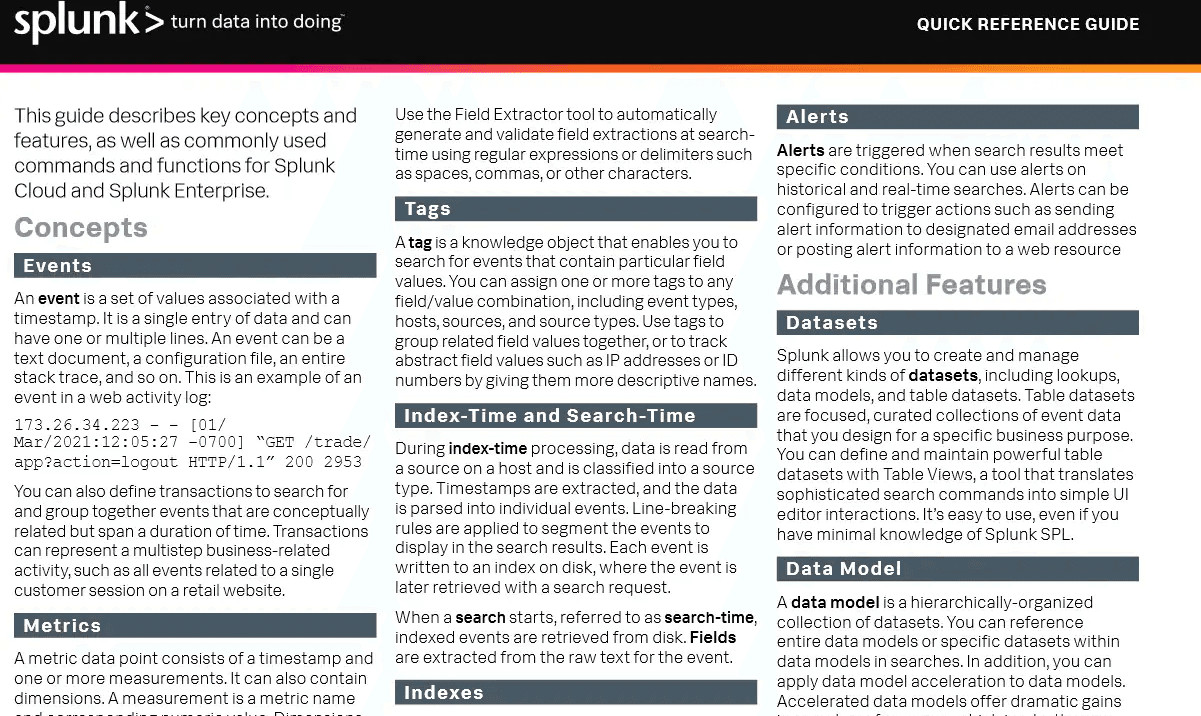
Splunk Query Examples: 15 SPL Searches Every SOC Analyst Needs (2026)
15 essential Splunk query examples for SOC analysts — failed logins, threat hunting, correlation, and incident investigation with real SPL you can run today.
SIEM Practice for Beginners: How Analysts Actually Correlate Logs
Querying a SIEM isn't the hard part — knowing what to correlate is. Here's how analysts actually think through log correlation, plus where to practice it.

SIEM vs EDR vs XDR: What Each Does and Which to Learn First
SIEM collects logs from everything, EDR watches and acts on endpoints, XDR joins a vendor's tools. Side-by-side table, SOAR and MDR, and does EDR replace SIEM.

5 Splunk Mistakes Beginners Make (And How to Fix Them)
New to Splunk? These five common SPL mistakes slow down almost every beginner — here's what to do instead.